
Sewage Cleanup Handled With the Care It Demands
A sewage backup is one of the more stressful things that can happen in a home. We approach it carefully, from containment through to sanitizing, so your family can feel comfortable in the space again.
Email Us for a Free Estimate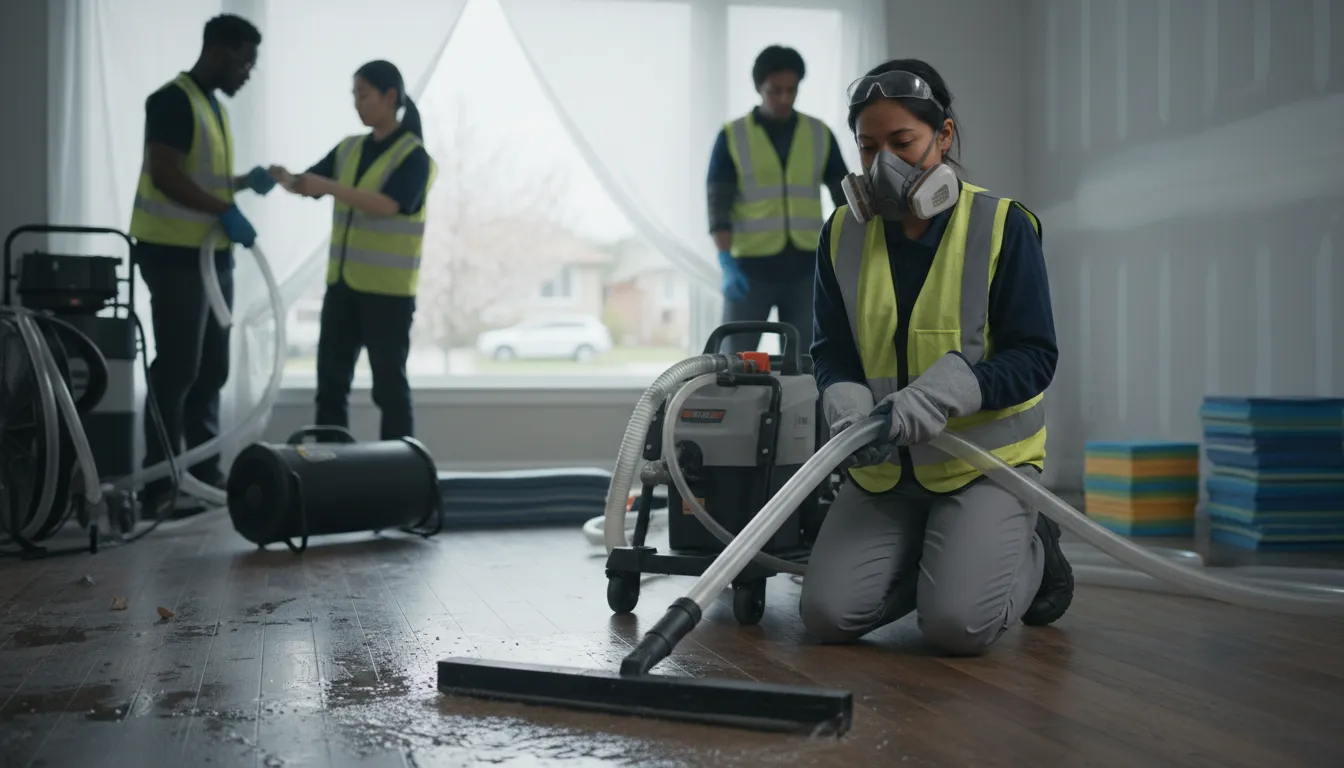
Why Sewage Cleanup Needs a Different Approach
Sewage backups aren't just a bigger version of a water leak — the contamination involved changes how the cleanup needs to happen, from the equipment we use to the materials we decide to remove versus dry.
Containment First
We work to prevent contaminated water from spreading into unaffected rooms or through HVAC pathways in the home.
Safe Removal
Standing sewage is extracted with equipment dedicated to contaminated water, kept separate from clean-water equipment.
Material Assessment
Porous materials like carpet, insulation and some drywall often can't be safely salvaged after sewage contact, and we're upfront about that.
Sanitizing Affected Areas
Once contaminated materials are removed, we clean and sanitize remaining surfaces thoroughly before drying begins.
Older Sewer Infrastructure Means More Backups During Heavy Storms
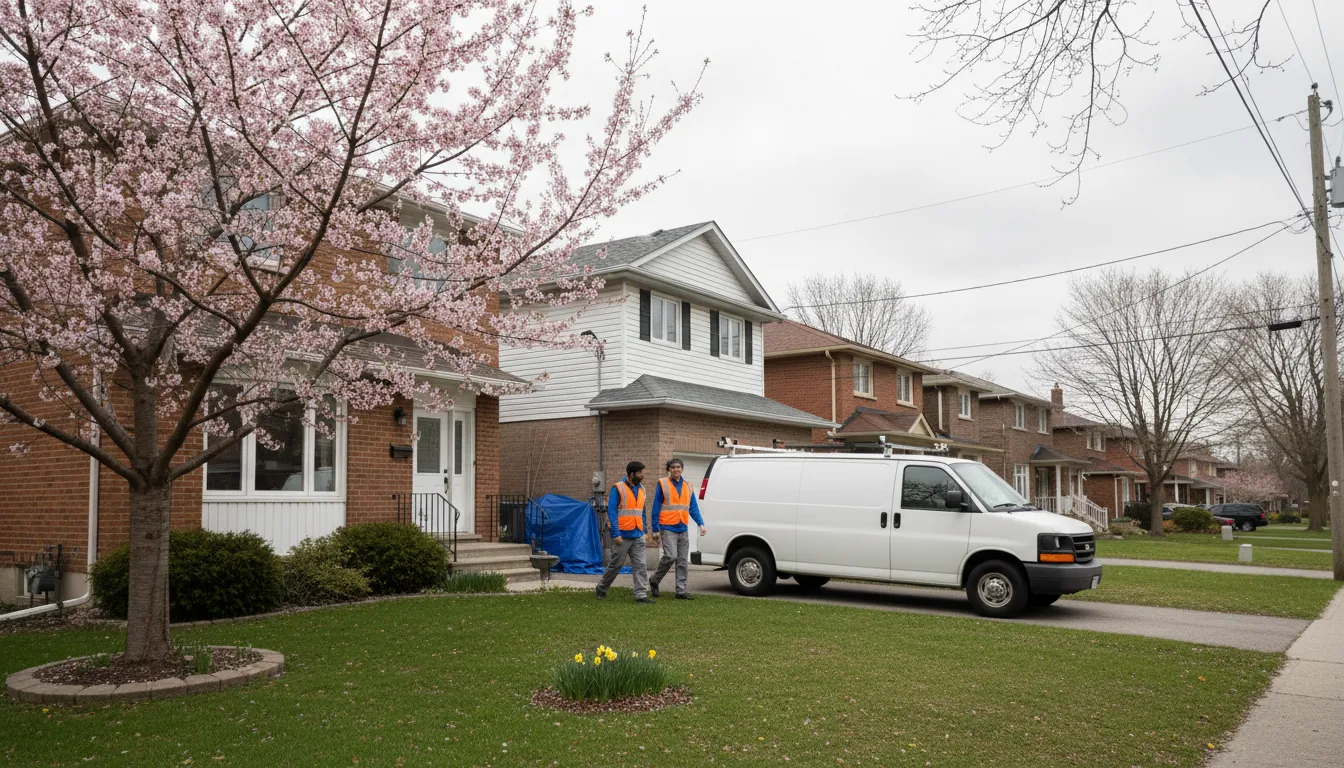
Parts of the GTA, including sections of Vaughan and older municipalities nearby, still run on combined or aging sewer systems that can back up into homes during intense rainfall. When that happens, water coming up through floor drains or basement fixtures isn't just water — it's contaminated and needs to be handled accordingly.
We Handle Contamination With the Right Precautions
Our process accounts for the health and safety concerns that come with sewage, including which materials must be discarded rather than dried, and how to sanitize a space properly so your family can use it again with confidence.
Our Sewage Cleanup Process
Each step is designed around safety as much as speed.
- 1
Contain the Area
We limit the affected zone to prevent contaminated water from reaching other parts of the home.
- 2
Extract Contaminated Water
Sewage is removed using equipment dedicated to contaminated water cleanup.
- 3
Remove Affected Materials
Porous materials that can't be safely sanitized are removed and disposed of properly.
- 4
Sanitize the Space
Remaining surfaces are cleaned and sanitized thoroughly before any drying equipment goes in.
- 5
Dry and Verify
We dry the space and confirm with moisture readings that it's ready to be used again.
Why Trust Us With Sewage Cleanup
This is work that requires care, not shortcuts, and we treat it that way.
Health-Focused Process
We prioritize proper sanitizing and removal of contaminated materials over speed alone.
Quick to Respond
We know sewage backups need prompt attention to limit exposure in the home.
Respectful Handling
We understand how upsetting a sewage backup can be and work with care and discretion.
Familiar With Local Infrastructure
We've seen how older GTA sewer systems behave during heavy storms.
Clear Explanations
We explain what needs to be removed and why, without unnecessary alarm.
Dedicated Equipment
Separate tools for contaminated versus clean water cleanup, used appropriately.
Sewage Cleanup Questions
Is it safe to stay in the home during sewage cleanup?
We typically recommend keeping the affected area closed off, and depending on the extent of contamination, may suggest limiting access to nearby areas until cleanup and sanitizing are complete.
What materials usually need to be replaced after a sewage backup?
Porous materials like carpet, carpet padding, some drywall and insulation often can't be safely sanitized after sewage contact and typically need to be removed and replaced.
Why do sewage backups happen more during storms?
In parts of the GTA with older or combined sewer systems, heavy rainfall can overwhelm capacity, pushing water back up through floor drains and basement fixtures into homes.
How is sewage cleanup different from regular flood cleanup?
Sewage cleanup requires containment and disposal precautions for contaminated materials, along with sanitizing steps that go beyond what's needed for a clean-water flood.
Will you dispose of contaminated materials?
Yes, proper disposal of materials that can't be salvaged is part of the process, handled according to standard practices for contaminated water damage.
Let Us Handle the Cleanup Safely
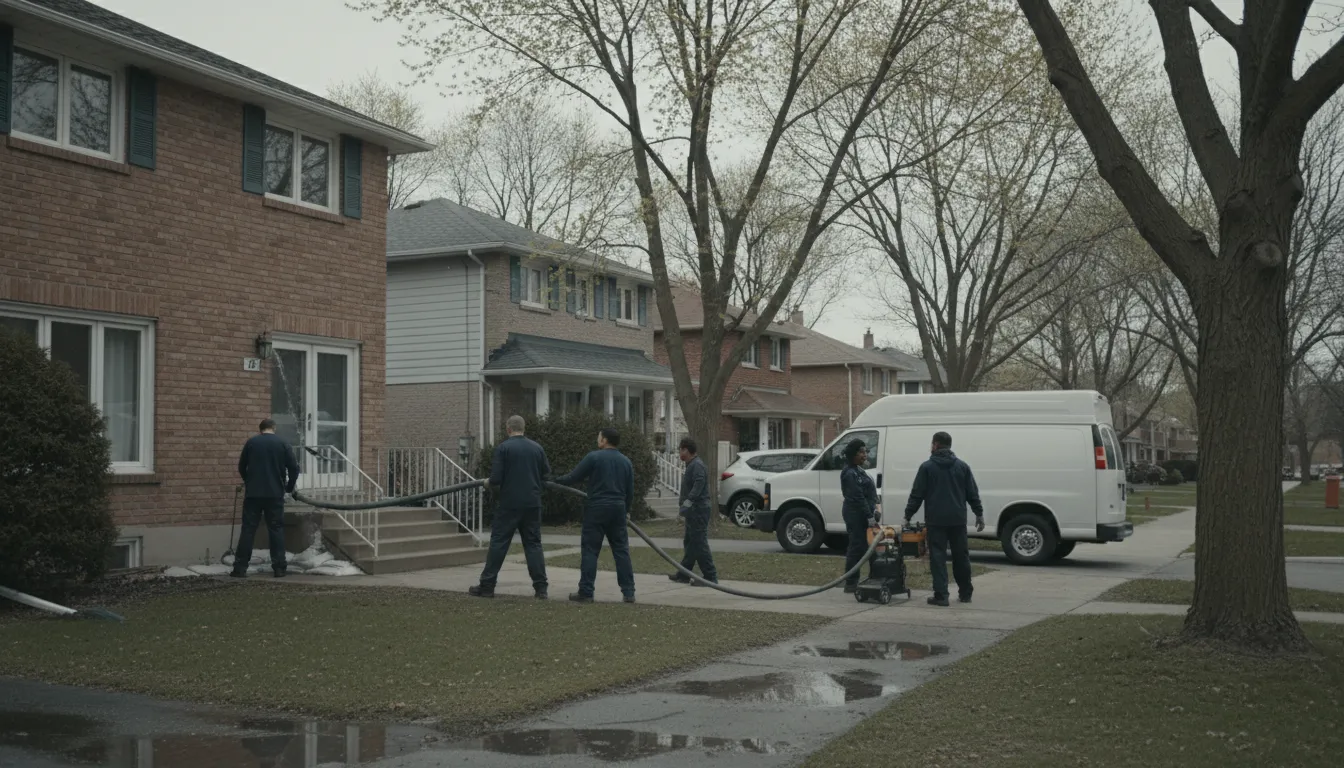
Email us the details of what's happened and we'll advise on the safest next steps.
Email Us for a Free EstimateWeather drives water-damage risk — email us if you find water.
Fall water-damage conditions in Vaughan, ON
Fall rain around Vaughan, ON tests gutters, sump pumps, and foundations; catching leaks and seepage early prevents the slow water damage and mold that surface over winter.
Proudly Serving Vaughan, ON
Local, on-time service throughout Vaughan and the surrounding area.