
Structural Drying: Reaching the Moisture You Can't See
Visible water is only part of the story. We focus on drying the framing, subfloor and insulation underneath, so moisture doesn't linger and turn into a bigger problem months later.
Email Us for a Free Estimate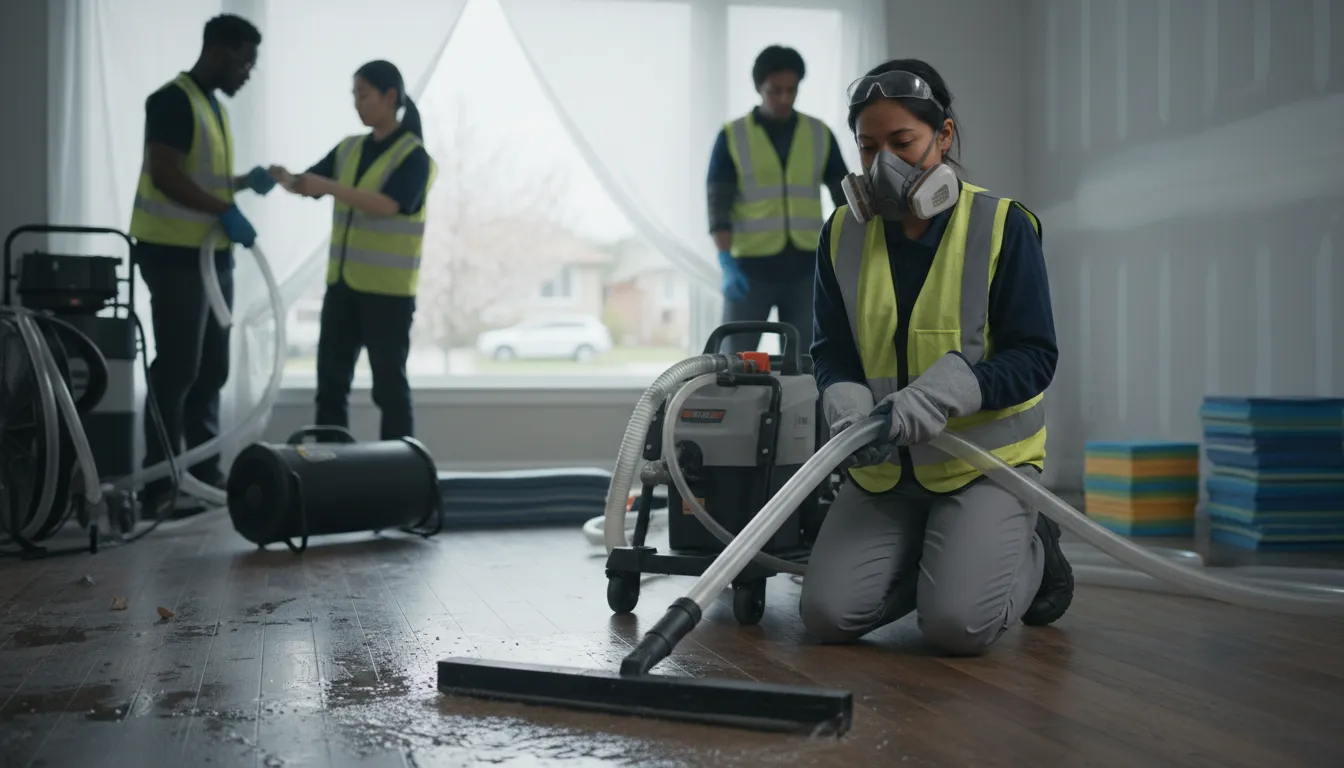
Why Structural Drying Matters More Than It Seems
It's tempting to think a space is dry once the floor looks dry and the dehumidifier has run for a day or two. In practice, moisture trapped in subfloors, framing and insulation can take much longer to resolve, and skipping this step is one of the most common reasons water damage turns into mould.
Framing and Subfloor
Wood absorbs moisture and releases it slowly, meaning studs and subfloor can stay damp well after the surface appears fine.
Insulation
Wet insulation loses effectiveness and can hold moisture against framing for an extended period if it isn't addressed.
Drywall and Baseboards
Water wicks upward through drywall, often requiring monitoring beyond the initial visible waterline.
Concrete and Foundation Walls
Basement concrete can hold moisture that affects indoor humidity levels even after surfaces feel dry to the touch.
GTA Winters and Humid Summers Both Work Against Half-Finished Drying
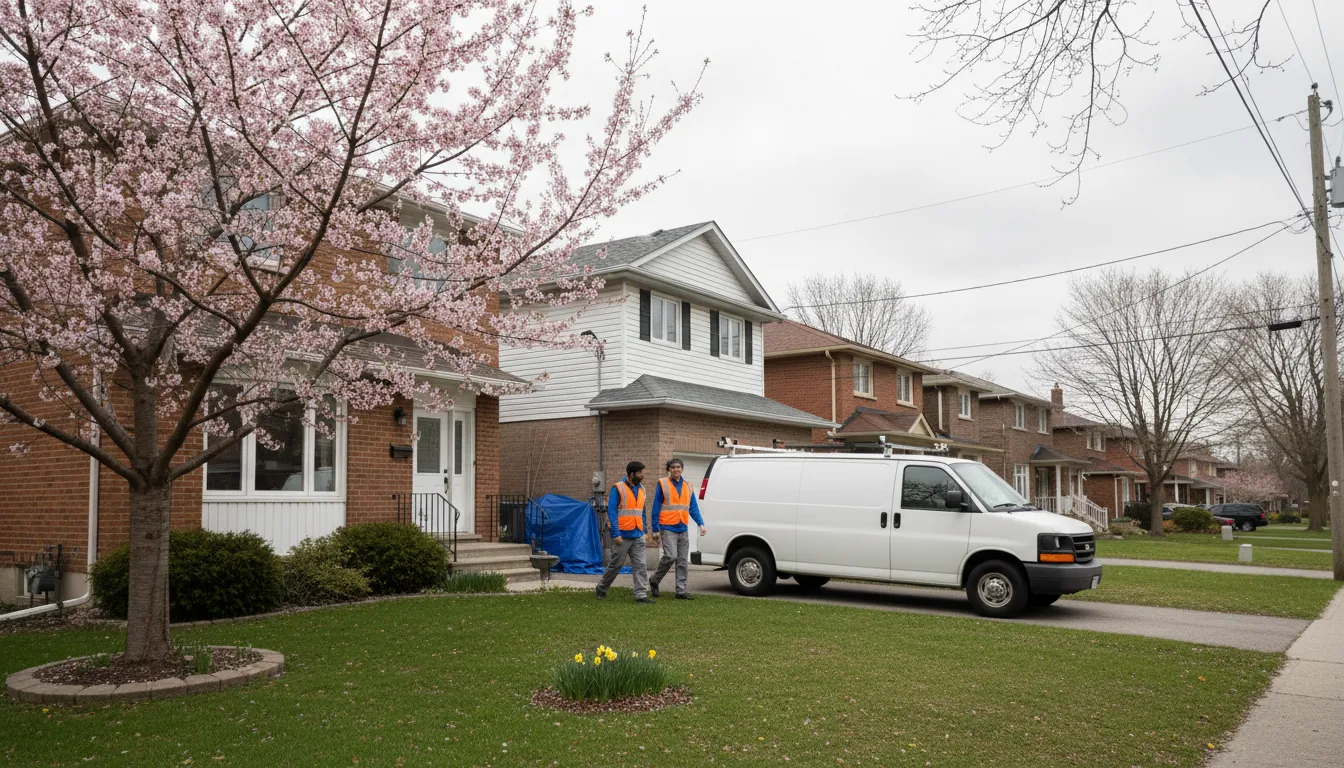
A basement dried only on the surface during a humid Toronto summer can pick moisture right back up from the air, while in winter, trapped dampness against cold foundation walls can encourage condensation and mould growth in ways that aren't always obvious until spring.
We Dry to a Verified Standard, Not a Time Estimate
Rather than running equipment for a set number of days and calling it done, we track moisture levels in the actual materials — framing, subfloor, drywall — and continue until those readings confirm the structure is genuinely dry.
Our Structural Drying Process
A methodical approach that relies on measurement, not assumption.
- 1
Initial Moisture Mapping
We check affected materials with moisture meters to understand the full extent of the dampness.
- 2
Equipment Placement
Air movers and dehumidifiers are positioned based on the specific layout and materials involved.
- 3
Daily Monitoring
We track moisture readings over the following days to see how drying is progressing.
- 4
Equipment Adjustments
If certain areas are drying more slowly, we adjust placement or add equipment as needed.
- 5
Final Verification
We confirm moisture levels are back to normal before considering the job complete.
Why Choose Us for Structural Drying
This is the step that's easiest to rush, and we make a point not to.
Measurement-Based Process
We rely on moisture readings, not visual guesswork, to determine when drying is complete.
Attentive Monitoring
We check in regularly rather than setting equipment and disappearing until pickup day.
Respect for Your Space
Equipment is placed thoughtfully to minimize disruption to your daily routine where possible.
Understanding of GTA Conditions
We account for seasonal humidity and freeze-thaw effects specific to this region.
Transparent Reporting
We share what the readings show and what it means in plain terms.
Appropriate Equipment
Air movers and dehumidifiers matched to the size and materials of the affected space.
Structural Drying Questions
How long does structural drying usually take?
It varies depending on how much water was involved and which materials absorbed it, but it commonly takes several days of monitored drying to bring framing and subfloor back to normal moisture levels.
How do you know when a space is fully dry?
We use moisture meters on the affected materials themselves, rather than judging by appearance, and continue drying until those readings return to expected levels.
Can drywall be dried instead of replaced?
In many cases, yes, especially if water exposure was limited and addressed quickly. More extensive or prolonged exposure sometimes means sections need to be removed instead.
Does structural drying help prevent mould?
Thorough drying of framing, subfloor and insulation significantly reduces the conditions mould needs to take hold, which is why we don't stop at surface-level dryness.
Do I need special equipment left in my home overnight?
Air movers and dehumidifiers typically need to run continuously for a period, so yes, equipment is usually left running in the space, which we'll explain fully before we set up.
Let's Make Sure Your Home Is Fully Dry, Not Just Surface-Dry
Email us for a free quote on structural drying and dehumidification.
Email Us for a Free EstimateWeather drives water-damage risk — email us if you find water.
Fall water-damage conditions in Vaughan, ON
Fall rain around Vaughan, ON tests gutters, sump pumps, and foundations; catching leaks and seepage early prevents the slow water damage and mold that surface over winter.
Proudly Serving Vaughan, ON
Local, on-time service throughout Vaughan and the surrounding area.